THE LATEST
Showing posts with label Lisa Swanson. Show all posts

Does Freelance Fit?: Pros and Cons of Freelance Work


During college, it can be very difficult to make ends meet or earn a little extra spending money on the side. Although academics are always the most important aspect of college, working provides hands-on experience and money. But what work is possible from your college dorm room that does not require a work scholarship or transportation? Freelance work.

Unlike working as a barista at the local cafe, doing freelance work only requires a computer, a strong Internet connection and time management skills. If you are a talented writer, editor, artist or translator, there is a steady supply of work available.

Decide if earning money through freelance work is worth your time after reading the following benefits and disadvantages of freelancing.

Benefits of Freelance Work

Working from home. All you need is a reliable Internet connection, which can be found at most dorms or a library. Most work can even be done at a communal desktop in the computer lab.

You have flexible hours. Unlike a job like working at the gym with set hours, doing freelance work does not require a fixed schedule. For college students, a flexible schedule is ideal to fit around homework, extracurriculars and a social life.

Relatively easy work is available. I regularly write 500-word articles on a variety of subjects. Each article only requires a little bit of research, one rewrite and about two hours of work. Depending on the work, most jobs do not require all that much effort.

A variety of work is offered. I tend to do freelance writing, but I have expanded my horizons a few times to include editing academic papers. Even the topics vary widely. I’ve written about the best printer paper, transexuals in the fashion industry and the most romantic beach getaways for couples. You learn about subjects you would typically not bother to research on your own time.

Disadvantages of Freelance Work

The pay can be terrible. Since most freelance work is conducted online, minimum wage laws do not always apply. As a first-time freelancer, your pay can be as little as a dollar per 600-word article. If you are good, you will eventually be able to raise your hourly rate above minimum wage.

You need to have solid time management skills. Since the work is off-site, you can finish the work at your own pace. But failing to submit a project in on time may result in terrible feedback or a reduced payment. Sometimes when homework begins to pile up, it becomes difficult to even go to the gym for an hour, let alone write 10 articles.

The possibility of being scammed is higher when doing freelance work than a traditional job. You may do everything right, turn your work in on time and then your client disappears without paying. Your valuable time has all gone to waste. Some freelance websites have their own security mechanisms to lower that probability, but it still exists.

Freelance work is not for everyone, but it does offer quick and easy money while you are busy at college. Although I cannot pay off my college tuition by freelancing, I can pay for dinner out once a month or a new pair of shoes. Hello, new slippers!

By: Lisa Swanson | Image: Source

Summer Day Trip: The Sand Dunes


‘Tis the season of planning backpack tours across Europe, working at a congressional office, or learning a new skill set for the summer. For those of us who cannot afford an extensive vacation away from work, travel options seem limited. But with a car, map and a group of friends, you can escape for a day trip to your local sand dunes.

Sand dunes are an interesting natural phenomenon that form when wind deposits sand from nearby lakes and are stabilized by plants and their root systems. Many states, including California, Michigan and Indiana, boast elaborate sand dunes. These high-rise dunes offer a day’s worth of exciting, free activities.

Sand Sledding
Imagine sledding in the summer, minus the red cheeks and runny nose. According to the Park Service at the Grand Sand Dunes National Park and Preserve, the best time to sled is when the sand is damp. Grab yourself a sled and race your friends down the largest sand dunes you can find.

Swimming
Sand dunes dot Lake Michigan’s coast in Indiana and Michigan, so pack your favorite bikini! The chilly water delightfully contrasts the hot sand and sun. Bring a frisbee or volleyball to play in the water. Do not forget sunscreen and some cute sunglasses to protect from the sun.

Hiking
More often than not, sand dunes are part of a state park that provides trails and picnic benches for free. Take advantage of the natural beauty surrounding the barren sand dunes by hiking through the trails. If you have more time, stop by the visitor’s center for information about the local wildlife, and have a competition to see who can spot the most animals.

Camping/Star Gazing
Often sand dunes are located near campgrounds. Spend some quality time with Mother Nature. Pitch a tent, and spend the night telling scary stories and roasting marshmallows. Creep out on the sand dunes at night when the sand will be cooler. Since sand dunes are located far away from large cities, light pollution will not obscure the stunning vista of hundreds of stars glowing.

Before getting to the sand dunes don’t forget to fill your tote with the essentials: smartphone with GPS capability, a towel and a water bottle. The best times to climb the sand dunes are in the early morning or late afternoon; avoid visiting the dunes around noon since the sand can potentially reach 150 degrees during the summer.

By: Lisa Swanson | Image: Source

3 Studio Ghibli Films You Will Love


I grew up on Disney films like "Peter Pan," but when my mother introduced me to Hayao Miyazaki’s "My Neighbor Totoro" (となりのトトロ in Japanese), I fell madly in love with Studio Ghibli’s films. Hayao Miyazaki is to Studio Ghibli as Walt Disney is to Disney. Every film by Miyazaki is a masterpiece. The art, music, and plot blend together to make a heart-wrenching story complicating the traditional “good vs. evil” storyline. I highly suggest you watch any of Miyazaki’s films. But these three are my all time favorites.


"Princess Mononoke" (もののけ姫)
"Princess Mononoke" is about a young prince, Ashitaka, whose battle with a corrupted demon curses his arm. He traverses Japan, seeking the Great Forest Spirit to heal him, but encounters a battle between the forest gods and a logging town whose occupants are composed of social outcasts -- lepers and former prostitutes. Does Ashitaka side with San -- who he calls Princess Mononoke -- or Eboshi, the strong willed female leader of the town?

This film is perfect for lovers of "The Lorax" and "Mulan."

"Porco Rosso" (紅の豚)
"Porco Rosso" follows a former World War I fighter pilot turned bounty hunter named Porco Rosso. His appearance may shock the average viewer since his face is cursed to resemble that of a pig. Porco Rosso, along with the talented mechanic Fio, fights sea pirates and a cocky American pilot. "Porco Rosso" is one of Studio Ghibli’s more lighthearted films, but it still subtly suggests the tensions between former WWI allies and enemies. Additionally, it is one of the few Miyazaki films set in a recognized time and place.

Fans of historical fiction will love this playful animation.

"Howl’s Moving Castle" (ハウルの動く城)
Sophie, a young hatter, is cursed in the beginning of Howl’s Moving Castle to look like an old woman by the Witch of the West. Sophie runs into Howl, a debonair wizard whose hobbies include running away from his duties in the war and chasing beautiful women. Their journey together in Howl’s stunning moving castle introduces the audience to a world of magic and human greed.

I highly suggest this film to anyone who enjoyed Disney’s "Peter Pan." 


The plots of these films are not the only spectacular part of these films. The music, composed by the likes of Joe Hisaishi, pulls every aspect of the films together. If you have free time, or just enjoy listening to instrumental music, CG recommends listening to Joe Hisaishi on Spotify while working on homework or relaxing.

You can find most of Studio Ghibli’s films in English on the internet, or purchase them at Target.

By: Lisa Swanson | Images: 1, 2, 3

Class Attire: Science Lab Style

Dressing up for class is easy. Dressing cute for the lab after class ... not so easy. It may be tempting to throw on an old shirt, jeans and gym shoes rather than plan an outfit. But hey, who says you can’t look great while finding the Higgs boson particle? I certainly don’t.

Laboratory Dress Code
Every laboratory’s dress code varies slightly depending on the experiments. Below I listed the general lab attire in chemistry, physics and biology labs:

  • Wear close-toed shoes
  • Avoid dangling jewelry
  • Shorts, dresses and skirts must cover your knees, unless you’re wearing an apron or lab coat
  • Wear safety goggles while working
  • Optional: Wear a lab coat
  • Optional: Wear gloves


Shoes
Let’s break down the dress code, starting with close-toed shoes. Unless specified that you must wear gym shoes, your options are limitless. CG suggests that you avoid wedges and heels in the lab ... or your favorite Uggs in case there is a chemical spill.


Accessories
Obviously steer away from large hoop earrings, long necklaces and scarves. CG recommends a classic leather watch that won’t impede your work. Warning: some physics labs that work with lasers require you do not wear anything reflective, so avoid metallic jewelry, and opt for wood earrings.


Clothing
Jeans are a girl’s best friend in college. And in lab, they’re perfect. If you’re comfortable with a maxi dress or skirt, rock it within protocol.


Now being the most fashionable girl at lab is easy. Just make sure not to catch a sleeve in the Bunsen burner, and throw your hair back into a messy bun.

By: Lisa Swanson | Image: Source

An Invite to Comic Con: The College Girl's Guide


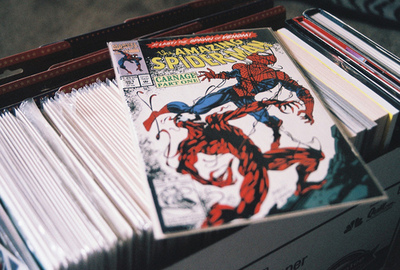
Once a year, for four days, a large gathering of Avengers lovers, Hobbit enthusiasts, casual Big Bang Theory watchers, and general comic fans amass at comic conventions in August. While the San Diego Comic Convention- colloquially known as Comic Con- is the most famous con, Illinois and many other states hold their own. You don’t have to be well-versed in every DC or Marvel comic in order to enjoy yourself. Every casual lover of superhero movies and BBC tv shows is welcome. With a little advice from dear old me, you can make your Comic Con experience one to remember for years to come.

The Comic Con Experience
Upon entering, you will notice rows of vendors lined up in a large hall, filled with eager people. Some people are dressed like characters, others are busily snapping photos. At the con, you can meet guest stars like Stan Lee, Zachary Quinto and John Barrowman and ask for their autographs. Personally, I love perusing the art booths, snatching up my favorite "Lord of the Rings" posters and fawning over outstanding homemade comics.


Common Decorum
If this is your first time going to a convention, there are a few highly-suggested rules to follow:
  • Ask before you take a photo: At the convention you will run into cosplayers, people who dress in the costume of a tv or manga character. Most cosplayers love taking photos, and they can pose in character if you give them warning. Others prefer not to have their photo taken or are too exhausted to take one when you ask. When a cosplayer is eating, it’s polite to wait until after they finish their meal. Additionally, do not take photos of the art unless told otherwise.
  • Don’t haggle: The term “struggling artist” is real. If you want a deal on artwork, wait until Sunday when most artists are selling their goods at a discounted rate. Swipe an artist’s business card if you don’t have enough cash at the moment and look through their online shop at home. 
  • Be polite at panels: Panels are an excellent place to learn about the animation industry and meet new artists. Don’t talk through a panel as you’ll disturb people there to learn.

What to Pack
  • A backpack or shoulder bag: While most artists provide a plastic bag for you to carry your purchases, the best approach is bringing your own bag. Preferably one that leaves your hands free, like a cross body style.
  • Cash: Most vendors refuse credit cards, and the nearest ATM might be outside the convention hall. By bringing cash you can limit the amount of money you spend, so spending doesn’t skyrocket.
  • Ticket: If you can, pre-order your ticket online and print it out. Tickets cost an additional $5 at the door.
  • A water bottle and snack: A slice of pizza alone can cost you $5 inside the convention. If you forget fuel, leave the convention hall and search for a restaurant nearby. With your wristlet or ticket, you can re-enter the convention.
  • Camera: My favorite part of Comic Con is taking pictures of the exhibits (hello, beautiful Tardis replica) and cosplayers. My friend took a photo of myself and three Stormtroopers last summer, and I still love it.
  • Phone and/or camera charger: One of the worst moments at Comic Con is when you see an amazing cosplay and your camera or phone has run out of charge. There are normally outlets ranging along the walls of the convention for those of us who run out of battery and are in desperate need.

What to Wear
Be comfy! Comic Con is not the time to test out your new four inch heels. Show your geek pride by wearing your V for Vendetta shirt!


Comic Con is an amazing experience solo or with friends. You will most likely walk away from the convention with unique artwork and a ton of memories to share. Check out the Comic Con website for details on the closest Comic Con and the guest stars.

By: Lisa Swanson | Images: 1, 2

An Insider's Guide to Hot Yoga


I’m more of a contact-sport kind of girl, but when a friend informed me that there was free hot yoga in town I was intrigued. Hot yoga, unlike regular yoga, is performed in temperatures up to 105 degrees Fahrenheit. Yoga studios often offer both regular yoga and hot yoga. The sauna-esque heat allows your muscles to stretch further sans pain throughout the duration of class.

I partook in two hot yoga classes and can honestly report that hot yoga is an excellent workout. But before attending a hot yoga class, let me fill you in with some details.

Class Length
Classes can run from 45 to 90 minutes. For your first class, always pick the shortest duration. Even if you run marathons for fun or bench 280 plus pounds, hot yoga is a completely different workout. Allow yourself time to adjust to hot yoga before continuing onto a longer class.

Hydration
Drink water before, during and after class. It is 105 degrees in the room, and you are practically swimming in your own sweat (attractive, I know). Due to the heat, you are losing liquids faster than Kim Kardashian’s marriage dissolved. If you feel dizzy, do not feel ashamed to lie down in Savasana (Dead Corpse Pose) and guzzle down water. In fact all instructors encourage their students to listen to their bodies over pushing themselves. I made the mistake of not hydrating before my 90 minute class and, consequently, sat out for most of the session.

I suggest bringing two 16-ounce water bottles (the standard size) to class. Before class, drink enough water that when you pee your urine is mostly clear. It is a crude test, and may sound excessive, but nothing is worse than fainting from dehydration.

It is Not a Competition
A wide variety of people do yoga: super fit yogi masters, me, beginners, you name it. At first, you will not be able to complete every pose with poise. Your legs will shake, you will sweat, but no one will care. Yoga is personal; you are not competing against your neighbor.

Materials

Combine hot yoga with a cardio routine every week, and hello beach body!

By: Lisa Swanson | Image: Source
 
Back To Top
Copyright © 2014 College Gloss. OddThemes